
BIPOC & LGBTQIA+ Playwrights and Plays

Professor-Librarian

A note from your friendly librarians....
Library catalogs were not originally designed to categorize by author characteristics such as race and ethnicity, or gender identity and sexuality, so what seems like a simple ask is....complicated.
Let us help you identify BIPOC playwrights by the various resources listed here!
-
Library catalogSearch by author or title to see if we have a copy of the play you are looking for!
Selected BIPOC plays (eBooks) and theatre criticism
-
 The 14th Tale
by
'The 14th Tale is a beautiful mellifluous narrative that tells the hilarious exploits of a natural born mischief, growing from the clay streets of Nigeria to rooftops in Dublin and finally to London.
ISBN: 9781783198863Publication Date: 2015
The 14th Tale
by
'The 14th Tale is a beautiful mellifluous narrative that tells the hilarious exploits of a natural born mischief, growing from the clay streets of Nigeria to rooftops in Dublin and finally to London.
ISBN: 9781783198863Publication Date: 2015 -
 Adrienne Kennedy Reader
by
Introduction by Werner SollorsAdrienne Kennedy has been a force in American theatre since the early 1960s, influencing generations of playwrights with her hauntingly fragmentary lyrical dramas. Exploring the violence racism visits upon people's lives, Kennedy's plays express poetic alienation, transcending the particulars of character and plot through ritualistic repetition and radical structural experimentation. Frequently produced, read, and taught, they continue to hold a significant place among the most exciting dramas of the past fifty years. This first comprehensive collection of her most important works traces the development of Kennedy's unique theatrical oeuvre from her Obie-winning Funnyhouse of a Negro (1964) through significant later works such as A Movie Star Has to Star in Black and White (1976), Ohio State Murders (1992), and June and Jean in Concert, for which she won an Obie in 1996. The entire contents of Kennedy's groundbreaking collections In One Act and The Alexander Plays are included, as is her earliest work'Because of the King of France'and the play An Evening with Dead Essex (1972). More recent prose writings'Secret Paragraphs about My Brother,''A Letter to Flowers,'and'Sisters Etta and Ella'are fascinating refractions of the themes and motifs of her dramatic works, even while they explore new material on teaching and writing. An introduction by Werner Sollors provides a valuable overview of Kennedy's career and the trajectory of her literary development. Adrienne Kennedy (b. 1931) is a three-time Obie-award winning playwright whose works have been widely performed and anthologized. Among her many honors are the American Academy of Arts and Letters award and the Guggenheim fellowship. In 1995-6, the Signature Theatre Company dedicated its entire season to presenting her work. She has been commissioned to write works for the Public Theater, Jerome Robbins, the Royal Court Theatre, the Mark Taper Forum, and Juilliard, and she has been a visiting professor at Yale, Princeton, Brown, the University of California at Berkeley, and Harvard. She lives in New York City.
ISBN: 9780816691708Publication Date: 2001
Adrienne Kennedy Reader
by
Introduction by Werner SollorsAdrienne Kennedy has been a force in American theatre since the early 1960s, influencing generations of playwrights with her hauntingly fragmentary lyrical dramas. Exploring the violence racism visits upon people's lives, Kennedy's plays express poetic alienation, transcending the particulars of character and plot through ritualistic repetition and radical structural experimentation. Frequently produced, read, and taught, they continue to hold a significant place among the most exciting dramas of the past fifty years. This first comprehensive collection of her most important works traces the development of Kennedy's unique theatrical oeuvre from her Obie-winning Funnyhouse of a Negro (1964) through significant later works such as A Movie Star Has to Star in Black and White (1976), Ohio State Murders (1992), and June and Jean in Concert, for which she won an Obie in 1996. The entire contents of Kennedy's groundbreaking collections In One Act and The Alexander Plays are included, as is her earliest work'Because of the King of France'and the play An Evening with Dead Essex (1972). More recent prose writings'Secret Paragraphs about My Brother,''A Letter to Flowers,'and'Sisters Etta and Ella'are fascinating refractions of the themes and motifs of her dramatic works, even while they explore new material on teaching and writing. An introduction by Werner Sollors provides a valuable overview of Kennedy's career and the trajectory of her literary development. Adrienne Kennedy (b. 1931) is a three-time Obie-award winning playwright whose works have been widely performed and anthologized. Among her many honors are the American Academy of Arts and Letters award and the Guggenheim fellowship. In 1995-6, the Signature Theatre Company dedicated its entire season to presenting her work. She has been commissioned to write works for the Public Theater, Jerome Robbins, the Royal Court Theatre, the Mark Taper Forum, and Juilliard, and she has been a visiting professor at Yale, Princeton, Brown, the University of California at Berkeley, and Harvard. She lives in New York City.
ISBN: 9780816691708Publication Date: 2001 -
 The African American Theatrical Body : Reception, Performance, and the Stage
by
Presenting an innovative approach to performance studies and literary history, Soyica Colbert argues for the centrality of black performance traditions to African American literature, including preaching, dancing, blues and gospel, and theatre itself, showing how these performance traditions create the'performative ground'of African American literary texts. Across a century of literary production using the physical space of the theatre and the discursive space of the page, W. E. B. Du Bois, Zora Neale Hurston, James Baldwin, August Wilson and others deploy performances to re-situate black people in time and space. The study examines African American plays past and present, including A Raisin in the Sun, Blues for Mister Charlie and Joe Turner's Come and Gone, demonstrating how African American dramatists stage black performances in their plays as acts of recuperation and restoration, creating sites that have the potential to repair the damage caused by slavery and its aftermath.
ISBN: 9781107014381Publication Date: 2011
The African American Theatrical Body : Reception, Performance, and the Stage
by
Presenting an innovative approach to performance studies and literary history, Soyica Colbert argues for the centrality of black performance traditions to African American literature, including preaching, dancing, blues and gospel, and theatre itself, showing how these performance traditions create the'performative ground'of African American literary texts. Across a century of literary production using the physical space of the theatre and the discursive space of the page, W. E. B. Du Bois, Zora Neale Hurston, James Baldwin, August Wilson and others deploy performances to re-situate black people in time and space. The study examines African American plays past and present, including A Raisin in the Sun, Blues for Mister Charlie and Joe Turner's Come and Gone, demonstrating how African American dramatists stage black performances in their plays as acts of recuperation and restoration, creating sites that have the potential to repair the damage caused by slavery and its aftermath.
ISBN: 9781107014381Publication Date: 2011 -
 August Wilson's Fences
by
Fences represents the decade of the 1950s, and, when it premiered in 1985, it won the Pulitzer Prize. Set during the beginnings of the civil rights movement, it also concerns generational change and renewal, ending with a celebration of the life of its protagonist, even though it takes place at his funeral. Critics and scholars have lauded August Wilson's work for its universality and its ability, especially in Fences, to transcend racial barriers and this play helped to earn him the titles of "America's greatest playwright" and "the African American Shakespeare."
ISBN: 9781441168443Publication Date: 2013-06-06
August Wilson's Fences
by
Fences represents the decade of the 1950s, and, when it premiered in 1985, it won the Pulitzer Prize. Set during the beginnings of the civil rights movement, it also concerns generational change and renewal, ending with a celebration of the life of its protagonist, even though it takes place at his funeral. Critics and scholars have lauded August Wilson's work for its universality and its ability, especially in Fences, to transcend racial barriers and this play helped to earn him the titles of "America's greatest playwright" and "the African American Shakespeare."
ISBN: 9781441168443Publication Date: 2013-06-06 -
 Bad Blood Blues
by
Are Africans being exploited as guinea pigs'to test new drugs for multi-national pharmaceutical companies? Why is HIV/AIDS treatment too expensive for countries where the virus is most rife? Is it okay to sacrifice lives to protect the integrity of medical studies? Bad Blood Blues is a powerfully intense new play that leads us deep into a personal and sexual moral maze while confronting the ethics of HIV/AIDS drug trials in Africa.
ISBN: 9781783194131Publication Date: 2009
Bad Blood Blues
by
Are Africans being exploited as guinea pigs'to test new drugs for multi-national pharmaceutical companies? Why is HIV/AIDS treatment too expensive for countries where the virus is most rife? Is it okay to sacrifice lives to protect the integrity of medical studies? Bad Blood Blues is a powerfully intense new play that leads us deep into a personal and sexual moral maze while confronting the ethics of HIV/AIDS drug trials in Africa.
ISBN: 9781783194131Publication Date: 2009 -
 The Big Life: The Ska Musical
by
Think about it. Think what you could achieve without women in your life. If all the time you spent on them, you spent on yourself. Think how much money you could save. Think how much aggravation you could avoid.Journeying over from the West Indies to England, Ferdy, Lennie, Dennis and Bernie are all eager to make successes of themselves and take full advantage of what they think The Big Life has to offer. So they pledge to abstain from women for three years. But Mary, Kathy, Zuleika and Sybil have other ideas. They know that man cannot live by bread alone! Will the men stick with their idea of The Big Life, or will Cupid have the final say?The Big Life is a musical, a wonderfully upbeat story of unrequited love, and a great comedy all rolled into one. It was produced at the Theatre Royal Stratford East, April 2004.
ISBN: 9781783193875Publication Date: 2018
The Big Life: The Ska Musical
by
Think about it. Think what you could achieve without women in your life. If all the time you spent on them, you spent on yourself. Think how much money you could save. Think how much aggravation you could avoid.Journeying over from the West Indies to England, Ferdy, Lennie, Dennis and Bernie are all eager to make successes of themselves and take full advantage of what they think The Big Life has to offer. So they pledge to abstain from women for three years. But Mary, Kathy, Zuleika and Sybil have other ideas. They know that man cannot live by bread alone! Will the men stick with their idea of The Big Life, or will Cupid have the final say?The Big Life is a musical, a wonderfully upbeat story of unrequited love, and a great comedy all rolled into one. It was produced at the Theatre Royal Stratford East, April 2004.
ISBN: 9781783193875Publication Date: 2018 -
 Blackeyed
by
Blackeyed is a collection of plays and monologues. The topics covered in the book include housing and foreclosure, suicide, assault, mental health, the Black male experience, and more. The book intersects with critical race theory because the majority of this work positions race at the center of the experiences of the fictional or fictionalized characters. Embedded in these chapters are the interweaving of personal and ancestral stories, news reports, informal conversations, observations, interviews, and online research expressed in language unapologetically Black, critical, reflexive, and proud.
ISBN: 9789462099173Publication Date: 2015-02-03
Blackeyed
by
Blackeyed is a collection of plays and monologues. The topics covered in the book include housing and foreclosure, suicide, assault, mental health, the Black male experience, and more. The book intersects with critical race theory because the majority of this work positions race at the center of the experiences of the fictional or fictionalized characters. Embedded in these chapters are the interweaving of personal and ancestral stories, news reports, informal conversations, observations, interviews, and online research expressed in language unapologetically Black, critical, reflexive, and proud.
ISBN: 9789462099173Publication Date: 2015-02-03 -
 Black Lives, Black Words : 32 Short Plays
by
Selected and edited by the award-winning American playwright Reginald Edmund, who produced Black Lives, Black Words across the US, which premiered in Chicago, July 2015. This ongoing international project has explored the black diaspora's experiences in some of the largest multicultural cities in the world, Chicago, Minneapolis, Cleveland, Toronto and London. Over sixty Black writers from the UK, USA, and Canada have each written a short play to address Black issues today. Featured in this collection are: Reginald Edmund Idris Goodwin James Austin Williams Rachel Dubose Becca C. Browne Marsha Estell Aaron Holland Loy A. Webb Lisa Langford Christina Ham Harrison David Rivers Dominique Morisseau Winsome Pinnock Trish Cooke Mojisola Adebayo Rachel De-Lahay Max Kolaru Yolanda Mercy Somalia Seaton Courttia Newland Luke Reece Tawiah BenEben M'Carthy Kanika Ambrose Jordan Laffrenier Meghan Swaby Mary Ann Anane Allie Woodson Elliot Sagay Amira Danan Cat Davidson Noelle Fourte.
ISBN: 9781786821522Publication Date: 2017
Black Lives, Black Words : 32 Short Plays
by
Selected and edited by the award-winning American playwright Reginald Edmund, who produced Black Lives, Black Words across the US, which premiered in Chicago, July 2015. This ongoing international project has explored the black diaspora's experiences in some of the largest multicultural cities in the world, Chicago, Minneapolis, Cleveland, Toronto and London. Over sixty Black writers from the UK, USA, and Canada have each written a short play to address Black issues today. Featured in this collection are: Reginald Edmund Idris Goodwin James Austin Williams Rachel Dubose Becca C. Browne Marsha Estell Aaron Holland Loy A. Webb Lisa Langford Christina Ham Harrison David Rivers Dominique Morisseau Winsome Pinnock Trish Cooke Mojisola Adebayo Rachel De-Lahay Max Kolaru Yolanda Mercy Somalia Seaton Courttia Newland Luke Reece Tawiah BenEben M'Carthy Kanika Ambrose Jordan Laffrenier Meghan Swaby Mary Ann Anane Allie Woodson Elliot Sagay Amira Danan Cat Davidson Noelle Fourte.
ISBN: 9781786821522Publication Date: 2017 -
 Black T Shirt Collection
by
“The wild things they did with those tees. Some held together by wooden pins. Some strung to wear just once. Some of long thin detachable sleeves...”A T-shirt is something most people have. It is a common denominator like a pair of blue jeans or a pair of Converse All Stars. From Fringe First winner Inua Ellams, comes a new story about two foster brothers building a global t-shirt brand. On their journey from a market in Nigeria to a sweatshop in China, Matthew and Muhammed discover the consequences of success. The play tackles capitalism and exploitation, as well as sectarianism and homophobia in modern day Nigeria.
ISBN: 9781849432955Publication Date: 2012
Black T Shirt Collection
by
“The wild things they did with those tees. Some held together by wooden pins. Some strung to wear just once. Some of long thin detachable sleeves...”A T-shirt is something most people have. It is a common denominator like a pair of blue jeans or a pair of Converse All Stars. From Fringe First winner Inua Ellams, comes a new story about two foster brothers building a global t-shirt brand. On their journey from a market in Nigeria to a sweatshop in China, Matthew and Muhammed discover the consequences of success. The play tackles capitalism and exploitation, as well as sectarianism and homophobia in modern day Nigeria.
ISBN: 9781849432955Publication Date: 2012 -
 Blues for Mister Charlie
by
In a small Southern town, a white man murders a black man, then throws his body in the weeds. With this act of violence--which is loosely based on the notorious 1955 killing of Emmett Till--James Baldwin launches an unsparing and at times agonizing probe of the wounds of race. For where once a white storekeeper could have shot a'boy'like Richard Henry with impunity, times have changed. And centuries of brutality and fear, patronage and contempt, are about to erupt in a moment of truth as devastating as a shotgun blast.In his award-winning play, Baldwin turns a murder and its aftermath into an inquest in which even the most well-intentioned whites are implicated--and in which even a killer receives his share of compassion.
ISBN: 9780804149747Publication Date: 1995
Blues for Mister Charlie
by
In a small Southern town, a white man murders a black man, then throws his body in the weeds. With this act of violence--which is loosely based on the notorious 1955 killing of Emmett Till--James Baldwin launches an unsparing and at times agonizing probe of the wounds of race. For where once a white storekeeper could have shot a'boy'like Richard Henry with impunity, times have changed. And centuries of brutality and fear, patronage and contempt, are about to erupt in a moment of truth as devastating as a shotgun blast.In his award-winning play, Baldwin turns a murder and its aftermath into an inquest in which even the most well-intentioned whites are implicated--and in which even a killer receives his share of compassion.
ISBN: 9780804149747Publication Date: 1995 -
 The Brother/Sister Plays
by
"McCraney's richly drawn characters and colloquial poetry . . . manages to sound both epic and rooted in a specific place. Listen closely, and you might hear that thrilling sound that is one of the main reasons we go to the theater, that beautiful music of a new voice."--The New York Times "Taut, expressive drama, The Brothers Size realizes the potential of theater to elevate the ordinary. . . . McCraney's writing can be arresting."--Time Out New York This is the first collection by Tarell Alvin McCraney, a major new playwright of the American theater. Lyrical and mythic, provocative and contemporary, McCraney's dramas of kinship, love, and heartache are set in the bayou of Louisiana and loosely draw on West African myths. In the Red and Brown Water charts the story of Oya, a fast and beautiful track star who must make difficult choices on her journey to womanhood. The Brothers Size dramatizes the struggle between brothers who have taken different paths: Ogun, single-mindedly running his auto shop, and Oshoosi, recently returned from prison and fallen back with trouble. Marcus; or the Secret of Sweet explores a young man's relationship with his history and friends as he discovers his sexuality and true self against the backdrop of an impending storm. Tarell Alvin McCraney's other works include Wig Out! and The Breach. His plays have been produced at The Public Theater in New York, internationally at the Royal Court Theatre and Abbey Theatre, and throughout the United States.
ISBN: 9781559363495Publication Date: 2010-08-17
The Brother/Sister Plays
by
"McCraney's richly drawn characters and colloquial poetry . . . manages to sound both epic and rooted in a specific place. Listen closely, and you might hear that thrilling sound that is one of the main reasons we go to the theater, that beautiful music of a new voice."--The New York Times "Taut, expressive drama, The Brothers Size realizes the potential of theater to elevate the ordinary. . . . McCraney's writing can be arresting."--Time Out New York This is the first collection by Tarell Alvin McCraney, a major new playwright of the American theater. Lyrical and mythic, provocative and contemporary, McCraney's dramas of kinship, love, and heartache are set in the bayou of Louisiana and loosely draw on West African myths. In the Red and Brown Water charts the story of Oya, a fast and beautiful track star who must make difficult choices on her journey to womanhood. The Brothers Size dramatizes the struggle between brothers who have taken different paths: Ogun, single-mindedly running his auto shop, and Oshoosi, recently returned from prison and fallen back with trouble. Marcus; or the Secret of Sweet explores a young man's relationship with his history and friends as he discovers his sexuality and true self against the backdrop of an impending storm. Tarell Alvin McCraney's other works include Wig Out! and The Breach. His plays have been produced at The Public Theater in New York, internationally at the Royal Court Theatre and Abbey Theatre, and throughout the United States.
ISBN: 9781559363495Publication Date: 2010-08-17 -
 Bulletproof Soul
by
What these Africans need to be learning about is air-con, man. I mean, I thought we were making poverty history! What was Live 8 for, then?'In Uganda, at a school for ex-child soldiers, Sol and Rena meet Alice. Sol is a charity worker, trying to keep his rebellious, seventeen-year-old sister Rena in line. Alice is Rena's age, but she's seen worse - and done worse - that either of them realise. As friendship develops, so does the risk of betrayal.A sharp explosive play about trying to do the right thing, Bulletproof Soul opened at the Birmingham Rep in March 2007.
ISBN: 9781786823229Publication Date: 2017
Bulletproof Soul
by
What these Africans need to be learning about is air-con, man. I mean, I thought we were making poverty history! What was Live 8 for, then?'In Uganda, at a school for ex-child soldiers, Sol and Rena meet Alice. Sol is a charity worker, trying to keep his rebellious, seventeen-year-old sister Rena in line. Alice is Rena's age, but she's seen worse - and done worse - that either of them realise. As friendship develops, so does the risk of betrayal.A sharp explosive play about trying to do the right thing, Bulletproof Soul opened at the Birmingham Rep in March 2007.
ISBN: 9781786823229Publication Date: 2017 -
 Busking It
by
Cities are full of stories – it's amazing what you hear if you stop and listen.Drawing on her decade of singing on the tube, Danusia Samal's Busking It is a journey through the tunnels of the London Underground.A fun, moving and vibrant piece of gig-theatre giving voice to the passers-by, blending chance encounters with original live music.
ISBN: 9781786825568Publication Date: 2018
Busking It
by
Cities are full of stories – it's amazing what you hear if you stop and listen.Drawing on her decade of singing on the tube, Danusia Samal's Busking It is a journey through the tunnels of the London Underground.A fun, moving and vibrant piece of gig-theatre giving voice to the passers-by, blending chance encounters with original live music.
ISBN: 9781786825568Publication Date: 2018 -
 But Still Like Air
by
In this pathbreaking volume, Velina Hasu Houston gathers together eleven plays that speak in the'hybridized, unique American voices of Asian descent -- and often dissent.'These writers resist the bigotry that attempts to target them solely as people of color as well as the homogenizing tendencies of a multiculturalism that fails to recognize the varied make-up of Asian America. Anthologized for the first time, these plays testify to the rich complexity of Asian American experience while they also demonstrate the different styles and thematic concerns of the individual playwrights. What are Asian American plays about? Family conflicts, sexuality, social upheaval, betrayal... the stuff of all drama. Whether the characters are a middle-aged Taiwanese woman who is married to an Irish American and who dreams of opening a Chinese restaurant, a Chinese American female bond trader trying to survive a corporate takeover, or an ABC (American Born Chinese) gay man whose lover has AIDS, their Asian-ness is only a part of their story. As a playwright, Houston is keenly aware of the rigid formulas that often exclude writers of color and women women writers from mainstream theater. But Still, Like air, I'll Rise brings forth vibrant new work that challenges producers and audiences to broaden their expectations, to attend to the unfamiliar voices that expresses the universal and particular vision of Asian American playwrights.
ISBN: 9781439906125Publication Date: 1997
But Still Like Air
by
In this pathbreaking volume, Velina Hasu Houston gathers together eleven plays that speak in the'hybridized, unique American voices of Asian descent -- and often dissent.'These writers resist the bigotry that attempts to target them solely as people of color as well as the homogenizing tendencies of a multiculturalism that fails to recognize the varied make-up of Asian America. Anthologized for the first time, these plays testify to the rich complexity of Asian American experience while they also demonstrate the different styles and thematic concerns of the individual playwrights. What are Asian American plays about? Family conflicts, sexuality, social upheaval, betrayal... the stuff of all drama. Whether the characters are a middle-aged Taiwanese woman who is married to an Irish American and who dreams of opening a Chinese restaurant, a Chinese American female bond trader trying to survive a corporate takeover, or an ABC (American Born Chinese) gay man whose lover has AIDS, their Asian-ness is only a part of their story. As a playwright, Houston is keenly aware of the rigid formulas that often exclude writers of color and women women writers from mainstream theater. But Still, Like air, I'll Rise brings forth vibrant new work that challenges producers and audiences to broaden their expectations, to attend to the unfamiliar voices that expresses the universal and particular vision of Asian American playwrights.
ISBN: 9781439906125Publication Date: 1997 -
 By the Way, Meet Vera Stark
by
"Nottage is one of our finest playwrights, a smart, empathetic, and daring storyteller who tells a story an audience won't expect."--Time Out New York "Lynn Nottage's work explores depths of humanness, the overlapping complexities of race, gender, culture and history--and the startling simplicity of desire--with a clear tenderness, with humor, with compassion."--Paula Vogel, Pulitzer Prize-winning playwright In her first new play since the critically acclaimed Ruined, Lynn Nottage examines the legacy of African Americans in Hollywood in a dramatic stylistic departure from her previous work. Fluidly incorporating film and video elements into her writing for the first time, Nottage's comedy tells the story of Vera Stark, an African American maid and budding actress who has a tangled relationship with her boss, a white Hollywood star desperately grasping to hold onto her career. Stirring audiences out of complacency by tackling racial stereotyping in the entertainment industry, Nottage highlights the paradox of black actors in 1930s Hollywood while jumping back and forward in time and location in this uniquely theatrical narrative. By the Way, Meet Vera Stark premiered in New York in 2011 and will receive productions at Los Angeles's Geffen Playhouse in fall 2012 and Chicago's Goodman Theatre and The Lyric Stage Company of Boston in spring 2013. Lynn Nottage's plays include the Pulitzer Prize-winning Ruined; Intimate ApparelFabulation, or the Re-Education of Undine; Crumbs from the Table of Joy; Las Meninas; Mud, River, Stone; Por'Knockers; and POOF!
ISBN: 9781559366489Publication Date: 2013-09-30
By the Way, Meet Vera Stark
by
"Nottage is one of our finest playwrights, a smart, empathetic, and daring storyteller who tells a story an audience won't expect."--Time Out New York "Lynn Nottage's work explores depths of humanness, the overlapping complexities of race, gender, culture and history--and the startling simplicity of desire--with a clear tenderness, with humor, with compassion."--Paula Vogel, Pulitzer Prize-winning playwright In her first new play since the critically acclaimed Ruined, Lynn Nottage examines the legacy of African Americans in Hollywood in a dramatic stylistic departure from her previous work. Fluidly incorporating film and video elements into her writing for the first time, Nottage's comedy tells the story of Vera Stark, an African American maid and budding actress who has a tangled relationship with her boss, a white Hollywood star desperately grasping to hold onto her career. Stirring audiences out of complacency by tackling racial stereotyping in the entertainment industry, Nottage highlights the paradox of black actors in 1930s Hollywood while jumping back and forward in time and location in this uniquely theatrical narrative. By the Way, Meet Vera Stark premiered in New York in 2011 and will receive productions at Los Angeles's Geffen Playhouse in fall 2012 and Chicago's Goodman Theatre and The Lyric Stage Company of Boston in spring 2013. Lynn Nottage's plays include the Pulitzer Prize-winning Ruined; Intimate ApparelFabulation, or the Re-Education of Undine; Crumbs from the Table of Joy; Las Meninas; Mud, River, Stone; Por'Knockers; and POOF!
ISBN: 9781559366489Publication Date: 2013-09-30 -
 Choir Boy
by
Armed with medicines, feeding tubes, and various medical accoutrement, Mary Jane is a single mother and a one-woman army when it comes to the care of her chronically ill son. A moving new play about the stalwart endurance of a devoted mother, Mary Jane by acclaimed playwright Amy Herzog demonstrates the prevailing strength of human will when fueled by unconditional love.
ISBN: 9781559364683Publication Date: 2016-02-02
Choir Boy
by
Armed with medicines, feeding tubes, and various medical accoutrement, Mary Jane is a single mother and a one-woman army when it comes to the care of her chronically ill son. A moving new play about the stalwart endurance of a devoted mother, Mary Jane by acclaimed playwright Amy Herzog demonstrates the prevailing strength of human will when fueled by unconditional love.
ISBN: 9781559364683Publication Date: 2016-02-02 -
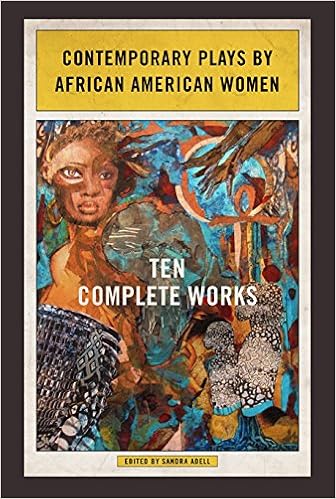 Contemporary Plays by African American Women
by
African American women have increasingly begun to see their plays performed from regional stages to Broadway. Yet many of these artists still struggle to gain attention. In this volume, Sandra Adell draws from the vital wellspring of works created by African American women in the twenty-first century to present ten plays by both prominent and up-and-coming writers. Taken together, the selections portray how these women engage with history as they delve into--and shake up--issues of gender and class to craft compelling stories of African American life. Gliding from gritty urbanism to rural landscapes, these works expand boundaries and boldly disrupt modes of theatrical representation. Selections: Blue Door , by Tanya Barfield; Levee James , by S. M. Shephard-Massat; Hoodoo Love , by Katori Hall; Carnaval , by Nikkole Salter; Single Black Female , by Lisa B. Thompson; Fabulation, or The Re-Education of Undine , by Lynn Nottage; BlackTop Sky , by Christina Anderson; Voyeurs de Venus , by Lydia Diamond; Fedra , by J. Nicole Brooks; and Uppa Creek: A Modern Anachronistic Parody in the Minstrel Tradition , by Keli Garrett.
ISBN: 9780252039713Publication Date: 2015-12-07
Contemporary Plays by African American Women
by
African American women have increasingly begun to see their plays performed from regional stages to Broadway. Yet many of these artists still struggle to gain attention. In this volume, Sandra Adell draws from the vital wellspring of works created by African American women in the twenty-first century to present ten plays by both prominent and up-and-coming writers. Taken together, the selections portray how these women engage with history as they delve into--and shake up--issues of gender and class to craft compelling stories of African American life. Gliding from gritty urbanism to rural landscapes, these works expand boundaries and boldly disrupt modes of theatrical representation. Selections: Blue Door , by Tanya Barfield; Levee James , by S. M. Shephard-Massat; Hoodoo Love , by Katori Hall; Carnaval , by Nikkole Salter; Single Black Female , by Lisa B. Thompson; Fabulation, or The Re-Education of Undine , by Lynn Nottage; BlackTop Sky , by Christina Anderson; Voyeurs de Venus , by Lydia Diamond; Fedra , by J. Nicole Brooks; and Uppa Creek: A Modern Anachronistic Parody in the Minstrel Tradition , by Keli Garrett.
ISBN: 9780252039713Publication Date: 2015-12-07 -
 Crumbs from the Table of Joy and Other Plays
by
This collection includes Lynn Nottage's best known work, Crumbs from the Table of Joy, which has been produced widely since its premiere in May 1995 and which the Chicago Tribune hailed as "a complex and thought provoking new play." Also included are Mud, River, Stone, Poof, Por'Knockers and her latest work, Las Meninas, inspired by the playwright's research into the African presence in 17th century Europe. Lynn Nottage lives in Brooklyn, New York. Her plays have been produced in many theatres across the U.S. including Second Stage (NY), South Coast Rep (Costa Mesa), Yale Repertory Theatre (New Haven), Alliance Theatre (Atlanta) and Steppenwolf (Chicago). She has won the Heideman and the White Bird awards and was a runner-up for the Susan Blackburn award.
ISBN: 9781559367073Publication Date: 2003-02-01
Crumbs from the Table of Joy and Other Plays
by
This collection includes Lynn Nottage's best known work, Crumbs from the Table of Joy, which has been produced widely since its premiere in May 1995 and which the Chicago Tribune hailed as "a complex and thought provoking new play." Also included are Mud, River, Stone, Poof, Por'Knockers and her latest work, Las Meninas, inspired by the playwright's research into the African presence in 17th century Europe. Lynn Nottage lives in Brooklyn, New York. Her plays have been produced in many theatres across the U.S. including Second Stage (NY), South Coast Rep (Costa Mesa), Yale Repertory Theatre (New Haven), Alliance Theatre (Atlanta) and Steppenwolf (Chicago). She has won the Heideman and the White Bird awards and was a runner-up for the Susan Blackburn award.
ISBN: 9781559367073Publication Date: 2003-02-01 -
The Day The Waters Came by Winner of the Writers'Guild of Great Britain Best Play for Children and Young People 2011It is summer, 2005, New Orleans. Maya Marsalis takes you by the hand, sometimes the throat, and leads you through her landscape the day Hurricane Katrina came, the levees broke, the world watched and the US Government did nothing. Go with her, as she shows you how her world and that of thousands of black American citizens changed forever, the day the waters came. A sister piece to Evans'seminal play for young audiences Stamping, Shouting And Singing Home, this new play explores the environmental and social impact of Hurricane Katrina on the communities in New Orleans.
ISBN: 9781849439060Publication Date: 2013 -
 Desdemona
by
The story of Desdemona from Shakespeare's Othello is re-imagined by Nobel Prize laureate Toni Morrison, Malian singer and songwriter Rokia Traoré, and acclaimed stage director Peter Sellars. Morrison's response to Sellars'2009 production of Othello is an intimate dialogue of words and music between Desdemona and her African nurse Barbary. Morrison gives voice and depth to the female characters, letting them speak and sing in the fullness of their hearts. Desdemona is an extraordinary narrative of words, music and song about Shakespeare's doomed heroine, who speaks from the grave about the traumas of race, class, gender, war — and the transformative power of love. Toni Morrison transports one of the most iconic, central, and disturbing treatments of race in Western culture into the new realities and potential outcomes facing a rising generation of the 21st century.
ISBN: 9781849436359Publication Date: 2012
Desdemona
by
The story of Desdemona from Shakespeare's Othello is re-imagined by Nobel Prize laureate Toni Morrison, Malian singer and songwriter Rokia Traoré, and acclaimed stage director Peter Sellars. Morrison's response to Sellars'2009 production of Othello is an intimate dialogue of words and music between Desdemona and her African nurse Barbary. Morrison gives voice and depth to the female characters, letting them speak and sing in the fullness of their hearts. Desdemona is an extraordinary narrative of words, music and song about Shakespeare's doomed heroine, who speaks from the grave about the traumas of race, class, gender, war — and the transformative power of love. Toni Morrison transports one of the most iconic, central, and disturbing treatments of race in Western culture into the new realities and potential outcomes facing a rising generation of the 21st century.
ISBN: 9781849436359Publication Date: 2012 -
 Detroit '67
by
It's 1967 in Detroit. Motown music is getting the party started, and Chelle and her brother Lank are making ends meet by turning their basement into an after-hours joint. But when a mysterious woman finds her way into their lives, the siblings clash over more much more than the family business. As their pent-up feelings erupt, so does their city, and they find themselves caught in the middle of the'67 riots. DETROIT'67 is presented in association with Classical Theatre of Harlem and the National Black Theatre.
ISBN: 9781783194995Publication Date: 2013
Detroit '67
by
It's 1967 in Detroit. Motown music is getting the party started, and Chelle and her brother Lank are making ends meet by turning their basement into an after-hours joint. But when a mysterious woman finds her way into their lives, the siblings clash over more much more than the family business. As their pent-up feelings erupt, so does their city, and they find themselves caught in the middle of the'67 riots. DETROIT'67 is presented in association with Classical Theatre of Harlem and the National Black Theatre.
ISBN: 9781783194995Publication Date: 2013 -
 Don't Start Me to Talking ...
by
"Nearly five decades of on-the-job training have equipped O'Neal with the skills and charm of a master storyteller."—The Drama Review "A dramatic tale spinner with a canny sense of humor and a winning, engaging stage presence. . . . O'Neal's shows mix folksiness, a sophisticated sense of theatricality and astute observation that are a pleasure to watch."—The Philadelphia Inquirer Artist and activist John M. O'Neal is best known for his Junebug Jabbo Jones cycle of plays, a remarkable collection of tales and anecdotes drawn from African American oral literature, which he has performed all over the globe. Four of these plays are included in this volume, along with four of O'Neal's other works: large-scale ensemble productions, first performed by his ensemble company Junebug Productions, as well as in collaboration with A Travelling Jewish Theater (San Francisco, California), Roadside Theater (Kentucky), and Pregones Theater (Bronx, New York). John M. O'Neal co-founded the Free Southern Theater in 1963 as a cultural arm of the southern Civil Rights movement, as well as Junebug Productions, a professional African American arts organization in New Orleans. For FST, O'Neal worked as a field director for the Student Non-Violent Coordinating Committee and worked as national field program director with the Committee for Racial Justice. He has written eighteen plays, a musical comedy, poetry, and several essays, and has performed throughout the United States, Canada, France, and Scandinavia. He is the recipient of the Award of Merit from the Association of Performing Arts Presenters, the United States Artists Award, and a Ford Foundation Award.
ISBN: 9781559367172Publication Date: 2016-05-30
Don't Start Me to Talking ...
by
"Nearly five decades of on-the-job training have equipped O'Neal with the skills and charm of a master storyteller."—The Drama Review "A dramatic tale spinner with a canny sense of humor and a winning, engaging stage presence. . . . O'Neal's shows mix folksiness, a sophisticated sense of theatricality and astute observation that are a pleasure to watch."—The Philadelphia Inquirer Artist and activist John M. O'Neal is best known for his Junebug Jabbo Jones cycle of plays, a remarkable collection of tales and anecdotes drawn from African American oral literature, which he has performed all over the globe. Four of these plays are included in this volume, along with four of O'Neal's other works: large-scale ensemble productions, first performed by his ensemble company Junebug Productions, as well as in collaboration with A Travelling Jewish Theater (San Francisco, California), Roadside Theater (Kentucky), and Pregones Theater (Bronx, New York). John M. O'Neal co-founded the Free Southern Theater in 1963 as a cultural arm of the southern Civil Rights movement, as well as Junebug Productions, a professional African American arts organization in New Orleans. For FST, O'Neal worked as a field director for the Student Non-Violent Coordinating Committee and worked as national field program director with the Committee for Racial Justice. He has written eighteen plays, a musical comedy, poetry, and several essays, and has performed throughout the United States, Canada, France, and Scandinavia. He is the recipient of the Award of Merit from the Association of Performing Arts Presenters, the United States Artists Award, and a Ford Foundation Award.
ISBN: 9781559367172Publication Date: 2016-05-30 -
 Father Comes Home from the Wars (Parts 1, 2 And 3)
by
"By turns philosophical and playful, lyrical and earthy, Father Comes Home from the Wars (Parts 1, 2 & 3), swoops, leaps, dives and soars, reimagining a turbulent point in American history through a cockeyed contemporary lens . . . The finest work yet from this gifted writer."—The New York Times "Thrilling. . . . A masterpiece . . . A story that engages the deepest possible issues in the most gripping possible ways."—New York Offered his freedom if he joins his master in the ranks of the Confederacy, Hero, a slave, must choose whether to leave the woman and people he loves for what may be another empty promise. As his decision brings him face to face with a nation at war with itself, the ones Hero left behind debate whether to escape or wait for his return, only to discover that for Hero, freedom may have come at a great spiritual cost. A devastatingly beautiful dramatic work, Father Comes Home from the Wars (Parts 1, 2, & 3) is the opening trilogy of a projected nine-play cycle that will ultimately take us into the present. Suzan-Lori Parks became the first African American woman to receive the Pulitzer Prize for Drama for her play Topdog/Underdog in 2002. Her other plays include The Book of Grace, In the Blood, Venus, The Death of the Last Black Man in the Whole Entire World, Fucking A, Imperceptible Mutabilities in the Third Kingdom and The America Play. In 2007 her 365 Days/365 Plays was produced at more than seven hundred theaters worldwide. Parks is a MacArthur Fellow and the Master Writer Chair at the Public Theater.
ISBN: 9781559368179Publication Date: 2015-06-01
Father Comes Home from the Wars (Parts 1, 2 And 3)
by
"By turns philosophical and playful, lyrical and earthy, Father Comes Home from the Wars (Parts 1, 2 & 3), swoops, leaps, dives and soars, reimagining a turbulent point in American history through a cockeyed contemporary lens . . . The finest work yet from this gifted writer."—The New York Times "Thrilling. . . . A masterpiece . . . A story that engages the deepest possible issues in the most gripping possible ways."—New York Offered his freedom if he joins his master in the ranks of the Confederacy, Hero, a slave, must choose whether to leave the woman and people he loves for what may be another empty promise. As his decision brings him face to face with a nation at war with itself, the ones Hero left behind debate whether to escape or wait for his return, only to discover that for Hero, freedom may have come at a great spiritual cost. A devastatingly beautiful dramatic work, Father Comes Home from the Wars (Parts 1, 2, & 3) is the opening trilogy of a projected nine-play cycle that will ultimately take us into the present. Suzan-Lori Parks became the first African American woman to receive the Pulitzer Prize for Drama for her play Topdog/Underdog in 2002. Her other plays include The Book of Grace, In the Blood, Venus, The Death of the Last Black Man in the Whole Entire World, Fucking A, Imperceptible Mutabilities in the Third Kingdom and The America Play. In 2007 her 365 Days/365 Plays was produced at more than seven hundred theaters worldwide. Parks is a MacArthur Fellow and the Master Writer Chair at the Public Theater.
ISBN: 9781559368179Publication Date: 2015-06-01 -
 Hidden Gems: Contemporary Black British Plays
by
This distinctive new volume of drama by black British playwrights exemplifies how experiments with form, subject-matter and genre can serve to centralise the experiences of black people in local, national and international contexts of culture, politics and performance. Each play is critically introduced, to create an anthology of interactions - between the people who have long championed the work through teaching and writing about it and the people who produce, perform and explain their intentions behind it. Something Dark by Lemn Sissay is now a set text on Edexcel's syllabus for A level English Literature and English Language and Literature.
ISBN: 9781786823281Publication Date: 2017
Hidden Gems: Contemporary Black British Plays
by
This distinctive new volume of drama by black British playwrights exemplifies how experiments with form, subject-matter and genre can serve to centralise the experiences of black people in local, national and international contexts of culture, politics and performance. Each play is critically introduced, to create an anthology of interactions - between the people who have long championed the work through teaching and writing about it and the people who produce, perform and explain their intentions behind it. Something Dark by Lemn Sissay is now a set text on Edexcel's syllabus for A level English Literature and English Language and Literature.
ISBN: 9781786823281Publication Date: 2017 -
 Hoodoo Love
by
THE STORY: A tale of love, magic, jealousy and secrets. Toulou escapes from the Mississippi cotton fields in the 1930s to pursue her dream of singing the blues in Memphis. When she meets a rambling blues man, the notorious Ace of Spades, her dreams
ISBN: 9780822222958Publication Date: 2009
Hoodoo Love
by
THE STORY: A tale of love, magic, jealousy and secrets. Toulou escapes from the Mississippi cotton fields in the 1930s to pursue her dream of singing the blues in Memphis. When she meets a rambling blues man, the notorious Ace of Spades, her dreams
ISBN: 9780822222958Publication Date: 2009 -
 Hurt Village
by
THE STORY: It's the end of a long summer in Hurt Village, a housing project in Memphis, Tennessee. A government Hope Grant means relocation for many of the project's residents, including Cookie, a thirteen-year-old aspiring rapper, along with her m
ISBN: 9780822226833Publication Date: 2011
Hurt Village
by
THE STORY: It's the end of a long summer in Hurt Village, a housing project in Memphis, Tennessee. A government Hope Grant means relocation for many of the project's residents, including Cookie, a thirteen-year-old aspiring rapper, along with her m
ISBN: 9780822226833Publication Date: 2011 -
 Indigenous North American Drama
by
ISBN: 9781438446615Publication Date: 2013-01-01Traces the historical dimensions of Native North American drama using a critical perspective.
Indigenous North American Drama
by
ISBN: 9781438446615Publication Date: 2013-01-01Traces the historical dimensions of Native North American drama using a critical perspective. -
 Inside
by
Looking for relief from boredom and a chance to get off the wing, seven young fathers in prison sign-up for an education programme. They try to use the workshops to settle scores and to rise up the prison pecking order. But they're confronted with more than they'd bargained for, as they face up to their relationships with their children and their own fathers. Self-deceptions, vulnerabilities, and failed hopes and dreams are revealed, unleashing anger and violence that the workshop leaders struggle to contain. Researched in Rochester Prison with a young fathers group, the pilot project was devised at the National Youth Theatre in 2008 and was presented as Fathers Inside at Cookham Wood Young Offenders Institute and at the Soho Theatre to critical acclaim.
ISBN: 9781849439169Publication Date: 2010
Inside
by
Looking for relief from boredom and a chance to get off the wing, seven young fathers in prison sign-up for an education programme. They try to use the workshops to settle scores and to rise up the prison pecking order. But they're confronted with more than they'd bargained for, as they face up to their relationships with their children and their own fathers. Self-deceptions, vulnerabilities, and failed hopes and dreams are revealed, unleashing anger and violence that the workshop leaders struggle to contain. Researched in Rochester Prison with a young fathers group, the pilot project was devised at the National Youth Theatre in 2008 and was presented as Fathers Inside at Cookham Wood Young Offenders Institute and at the Soho Theatre to critical acclaim.
ISBN: 9781849439169Publication Date: 2010 -
 Knight Watch
by
In a world where tower blocks are stone mountains and city walls are urban tapestries retelling epic fights, Michael keeps away from the warring tribes until a passerby helps him out of a tight situation. Instantly, he is pulled into the culture he has tried to escape. The city spirals out of control as battle lines are drawn and redrawn. In the quest for balance, loyalty, faith and friendships are tested, but will Michael succeed in ending the war? In rhythmic, sizzling poetry award-winning spoken word artist, Inua Ellams, conjures the violence of a city not unlike London and imagines a more beautiful world beyond it.
ISBN: 9781849435550Publication Date: 2012
Knight Watch
by
In a world where tower blocks are stone mountains and city walls are urban tapestries retelling epic fights, Michael keeps away from the warring tribes until a passerby helps him out of a tight situation. Instantly, he is pulled into the culture he has tried to escape. The city spirals out of control as battle lines are drawn and redrawn. In the quest for balance, loyalty, faith and friendships are tested, but will Michael succeed in ending the war? In rhythmic, sizzling poetry award-winning spoken word artist, Inua Ellams, conjures the violence of a city not unlike London and imagines a more beautiful world beyond it.
ISBN: 9781849435550Publication Date: 2012 -
 Lost Plays of the Harlem Renaissance, 1920-1940
by
This compilation of sixteen plays written during the Harlem Renaissance brings together for the first time the works of Langston Hughes, George S. Schuyler, Francis Hall Johnson, Shirley Graham, and others. In the introduction, James V. Hatch sets the plays in a historical context as he describes the challenges presented to artists by the political and social climate of the time. The topics of the plays cover the realm of the human experience in styles as wide-ranging as poetry, farce, comedy, tragedy, social realism, and romance. Individual introductions to each play provide essential biographical background on the playwrights. In the continuing rediscovery of writers and works from the Harlem Renaissance, Lost Plays of the Harlem Renaissance 1920-1940 serves as essential background for contemporary readers and is a valuable contribution to African American literary and theatrical scholarship.
ISBN: 9780814338339
Lost Plays of the Harlem Renaissance, 1920-1940
by
This compilation of sixteen plays written during the Harlem Renaissance brings together for the first time the works of Langston Hughes, George S. Schuyler, Francis Hall Johnson, Shirley Graham, and others. In the introduction, James V. Hatch sets the plays in a historical context as he describes the challenges presented to artists by the political and social climate of the time. The topics of the plays cover the realm of the human experience in styles as wide-ranging as poetry, farce, comedy, tragedy, social realism, and romance. Individual introductions to each play provide essential biographical background on the playwrights. In the continuing rediscovery of writers and works from the Harlem Renaissance, Lost Plays of the Harlem Renaissance 1920-1940 serves as essential background for contemporary readers and is a valuable contribution to African American literary and theatrical scholarship.
ISBN: 9780814338339 -
 Michael Abbensetts - Four Plays
by
Call Number: EBOOKISBN: 1840021799Publication Date: 2001-04-01Michael Abbensetts is the writer who gave Carribeans a real voice in Britain.
Michael Abbensetts - Four Plays
by
Call Number: EBOOKISBN: 1840021799Publication Date: 2001-04-01Michael Abbensetts is the writer who gave Carribeans a real voice in Britain.
Features the plays Sweet talk, Alterations, In the Mood and El Dorado.
Sweet talk is a witty, energetic and finally moving account of a marriage in crisis.
Alterations is a comedy set in a tailor's shop, inspired by a real visit to a small room off Carnaby Street where two black tailors had set up shop with just two sewing machines and an ironing board.
In the Mood focuses on two Caribbean Second World War veterans, whose nostalgic Remembrance Sunday lunch is disrupted by a visit from their frivolour and irritating friend, in search of a loan and as many free drinks as he can get his hands on.
El Dorado turns its attention to a mixed-race, middle class family interred in their formerly grand but now dilapidated house. A grandson returns home to lay some ghosts to bed, and gains an alarming insight into the truths of home life.. -
 Mixed Company:Three Early Jamaican Plays : Three Early Jamaican Plays
by
In 2012 Jamaica celebrates the 50th anniversary of Independence.Mixed Company is a collection of three of the finest early Jamaicantheatrical works, written for the most part before the dawn ofIndependence.Written in 1954 (The Creatures by Cicely Waite-Smith), 1960 (Bedwardby Louis Marriott) and 1970 (Maskarade by Sylvia Wynter), the playsare examples of works conceived with a Jamaican audience in mind,a Jamaican audience conscious of the melting pot in which it lived.Each offers a unique perspective on the spirit of a people whoheld on to traditional beliefs and customs in the face of colonialopprobrium as the populace struggled to gain its political, socialand cultural independence.
ISBN: 9781849436342Publication Date: 2012
Mixed Company:Three Early Jamaican Plays : Three Early Jamaican Plays
by
In 2012 Jamaica celebrates the 50th anniversary of Independence.Mixed Company is a collection of three of the finest early Jamaicantheatrical works, written for the most part before the dawn ofIndependence.Written in 1954 (The Creatures by Cicely Waite-Smith), 1960 (Bedwardby Louis Marriott) and 1970 (Maskarade by Sylvia Wynter), the playsare examples of works conceived with a Jamaican audience in mind,a Jamaican audience conscious of the melting pot in which it lived.Each offers a unique perspective on the spirit of a people whoheld on to traditional beliefs and customs in the face of colonialopprobrium as the populace struggled to gain its political, socialand cultural independence.
ISBN: 9781849436342Publication Date: 2012 -
 The Mountaintop
by
Exactly one year ago, I stood in that crumbling pulpit in Riverside and shouted that this war would be our own violent undoing, freedom's suicide . . . Well, I'll tell you, there weren't too many Amens that Sunday. But who is a man who does not speak his mind? He is not a man, but I am a man. The night before his assassination, King retires to room 306 in the now-famous Lorraine Motel after giving an acclaimed speech to a massive church congregation. When a mysterious young maid visits him to deliver a cup of coffee, King is forced to confront his past and the future of his people. Portraying rhetoric, hope and ideals of social change, The Mountaintop also explores being human in the face of inevitable death. The play is a dramatic feat of daring originality, historical narration and triumphant compassion. This Modern Classics edition of the play features a foreword by Michael Eric Dyson and an introduction by Faedra Chatard Carpenter, Assistant Professor and Director of Undergraduate Studies in Theatre, University of Maryland.
ISBN: 9781472587718Publication Date: 2014
The Mountaintop
by
Exactly one year ago, I stood in that crumbling pulpit in Riverside and shouted that this war would be our own violent undoing, freedom's suicide . . . Well, I'll tell you, there weren't too many Amens that Sunday. But who is a man who does not speak his mind? He is not a man, but I am a man. The night before his assassination, King retires to room 306 in the now-famous Lorraine Motel after giving an acclaimed speech to a massive church congregation. When a mysterious young maid visits him to deliver a cup of coffee, King is forced to confront his past and the future of his people. Portraying rhetoric, hope and ideals of social change, The Mountaintop also explores being human in the face of inevitable death. The play is a dramatic feat of daring originality, historical narration and triumphant compassion. This Modern Classics edition of the play features a foreword by Michael Eric Dyson and an introduction by Faedra Chatard Carpenter, Assistant Professor and Director of Undergraduate Studies in Theatre, University of Maryland.
ISBN: 9781472587718Publication Date: 2014 -
 Obama-ology
by
I am black enough to get stopped by the police, and I'm sure as hell black enough to work on a campaign for the first African American who has a chance at being the leader of the free world. When African-American college graduate Warren takes a job with the 2008 Obama campaign, he's fired up and ready to go – until he lands in the troubled streets of East Cleveland. But somewhere between knocking on doors, fending off cops, and questioning his own racial and sexual identity, he learns that changing society isn't as easy as he imagined… A stunning new play that demonstrates the resilience of the human spirit to overcome defeat at the hands of social repression and financial hardship.
ISBN: 9781783197033Publication Date: 2014
Obama-ology
by
I am black enough to get stopped by the police, and I'm sure as hell black enough to work on a campaign for the first African American who has a chance at being the leader of the free world. When African-American college graduate Warren takes a job with the 2008 Obama campaign, he's fired up and ready to go – until he lands in the troubled streets of East Cleveland. But somewhere between knocking on doors, fending off cops, and questioning his own racial and sexual identity, he learns that changing society isn't as easy as he imagined… A stunning new play that demonstrates the resilience of the human spirit to overcome defeat at the hands of social repression and financial hardship.
ISBN: 9781783197033Publication Date: 2014 -
 The Oberon Anthology of Contemporary American Plays: Volume One
by
This new series brings together some of the best new writing from contemporary American playwrights.Volume One is introduced by Andre Bishop, Artistic Director of the Lincoln Center Theater, the most prestigious theatre in the USA. Each play is introduced by critically acclaimed writers themselves.The volume includes:KIN by Bathsheba Doran, (with an introduction by Chris Durang)Kin sheds a sharp light on the changing face of kinship in the expansive landscape of the modern world.“Simply terrific. Perhaps the finest new play of the season. Funny and audacious, haunting, and exquisitely wrought.” - Charles Isherwood, New York TimesMIDDLETOWN by Will Eno (with an introduction by Gordon Lish)Middletown was awarded the prestigious Horton Foote Prize for Promising New American Play in 2010.“Middletown glimmers from start to finish with tart, funny, gorgeous little comments on big things: the need for love and forgiveness, the search for meaning in life, the long, lonely ache of disappointment.” - Charles Isherwood, New York TimesCOMPLETENESS by Itamar Moses (with an introduction by Doug Wright)Completeness is a 21st-century romantic comedy about the timeless confusions of love.“A funny, ridiculously smart new play. I haven't seen another play recently that so perfectly captured love – hot-blooded, fearless, fickle – at this stage in life. I was left with nothing but admiration.” - Jeremy Gerard, Bloomberg NewsGOD'S EAR by Jenny Schwartz (with an introduction by Edward Albee)“This ode to love, loss and the routines of life has the economy and dry wit of a Sondheim love song … Schwartz is a real talent and she is trying something ambitious … In [her] very modern way, [she is] making a rather old-fashioned case for the power of the written word.” - Jason Zinoman, New York Times
ISBN: 9781849436182Publication Date: 2012
The Oberon Anthology of Contemporary American Plays: Volume One
by
This new series brings together some of the best new writing from contemporary American playwrights.Volume One is introduced by Andre Bishop, Artistic Director of the Lincoln Center Theater, the most prestigious theatre in the USA. Each play is introduced by critically acclaimed writers themselves.The volume includes:KIN by Bathsheba Doran, (with an introduction by Chris Durang)Kin sheds a sharp light on the changing face of kinship in the expansive landscape of the modern world.“Simply terrific. Perhaps the finest new play of the season. Funny and audacious, haunting, and exquisitely wrought.” - Charles Isherwood, New York TimesMIDDLETOWN by Will Eno (with an introduction by Gordon Lish)Middletown was awarded the prestigious Horton Foote Prize for Promising New American Play in 2010.“Middletown glimmers from start to finish with tart, funny, gorgeous little comments on big things: the need for love and forgiveness, the search for meaning in life, the long, lonely ache of disappointment.” - Charles Isherwood, New York TimesCOMPLETENESS by Itamar Moses (with an introduction by Doug Wright)Completeness is a 21st-century romantic comedy about the timeless confusions of love.“A funny, ridiculously smart new play. I haven't seen another play recently that so perfectly captured love – hot-blooded, fearless, fickle – at this stage in life. I was left with nothing but admiration.” - Jeremy Gerard, Bloomberg NewsGOD'S EAR by Jenny Schwartz (with an introduction by Edward Albee)“This ode to love, loss and the routines of life has the economy and dry wit of a Sondheim love song … Schwartz is a real talent and she is trying something ambitious … In [her] very modern way, [she is] making a rather old-fashioned case for the power of the written word.” - Jason Zinoman, New York Times
ISBN: 9781849436182Publication Date: 2012 -
 The Oberon Anthology of Contemporary American Plays: Volume Two
by
The second volume in this series brings together some of the best new writing from contemporary American playwrights, each play introduced by critically acclaimed writers themselves.The volume includes:The Edge of Our Bodies by Adam Rapp, introduced by AM HomesThe Coward by Nick Jones, introduced by Marsha NormanThe Book of Grace by Suzan-Lori Parks, introduced by Oskar EustisWhat Once We Felt by Ann Marie Healy, introduced by Paula Vogel
ISBN: 9781786823212Publication Date: 2018
The Oberon Anthology of Contemporary American Plays: Volume Two
by
The second volume in this series brings together some of the best new writing from contemporary American playwrights, each play introduced by critically acclaimed writers themselves.The volume includes:The Edge of Our Bodies by Adam Rapp, introduced by AM HomesThe Coward by Nick Jones, introduced by Marsha NormanThe Book of Grace by Suzan-Lori Parks, introduced by Oskar EustisWhat Once We Felt by Ann Marie Healy, introduced by Paula Vogel
ISBN: 9781786823212Publication Date: 2018 -
 The Oberon Book of Monologues for Black Actors: Classical and Contemporary Speeches From Black British Plays: Monologues for Men – Volume 1 : Classical and Contemporary Speeches From Black British Plays
by
Foreword by Kwame Kwei Armah How many Black British plays can you name? Inspired by both classical and contemporary plays, The Oberon Book of Monologues for Black Actors gives readers an insight into some of the best cutting-edge plays written by black British playwrights, over the last sixty years. This collection features over twenty speeches by Britain's most prominent black dramatists. The monologues represent a wide-range of themes, characters, dialects and styles. Suitable for young people and adults, each selection includes production information, a synopsis of the play, a biography of the playwright and a scene summary. The aim of this collection is that actors will enjoy working on these speeches, using them to help strengthen their craft, and by doing so, help to ensure these plays are always remembered.
ISBN: 9781783195565Publication Date: 2013
The Oberon Book of Monologues for Black Actors: Classical and Contemporary Speeches From Black British Plays: Monologues for Men – Volume 1 : Classical and Contemporary Speeches From Black British Plays
by
Foreword by Kwame Kwei Armah How many Black British plays can you name? Inspired by both classical and contemporary plays, The Oberon Book of Monologues for Black Actors gives readers an insight into some of the best cutting-edge plays written by black British playwrights, over the last sixty years. This collection features over twenty speeches by Britain's most prominent black dramatists. The monologues represent a wide-range of themes, characters, dialects and styles. Suitable for young people and adults, each selection includes production information, a synopsis of the play, a biography of the playwright and a scene summary. The aim of this collection is that actors will enjoy working on these speeches, using them to help strengthen their craft, and by doing so, help to ensure these plays are always remembered.
ISBN: 9781783195565Publication Date: 2013 -
 The Oberon Book of Monologues for Black Actors: Classical and Contemporary Speeches From Black British Plays: Monologues for Women – Volume 1 : Classical and Contemporary Speeches From Black British Plays
by
Foreword by Naomie Harris How many Black British plays can you name? Inspired by both classical and contemporary plays, The Oberon Book of Monologues for Black Actresses gives readers an insight into some of the best cutting-edge plays written by black British playwrights, over the last sixty years. This collection features over twenty speeches by Britain's most prominent black dramatists. The monologues represent a wide-range of themes, characters, dialects and styles. Suitable for young people and adults, each selection includes production information, a synopsis of the play, a biography of the playwright and a scene summary. The aim of this collection is that actors will enjoy working on these speeches, using them to help strengthen their craft, and by doing so, help to ensure these plays are always remembered.
ISBN: 9781783195558Publication Date: 2013
The Oberon Book of Monologues for Black Actors: Classical and Contemporary Speeches From Black British Plays: Monologues for Women – Volume 1 : Classical and Contemporary Speeches From Black British Plays
by
Foreword by Naomie Harris How many Black British plays can you name? Inspired by both classical and contemporary plays, The Oberon Book of Monologues for Black Actresses gives readers an insight into some of the best cutting-edge plays written by black British playwrights, over the last sixty years. This collection features over twenty speeches by Britain's most prominent black dramatists. The monologues represent a wide-range of themes, characters, dialects and styles. Suitable for young people and adults, each selection includes production information, a synopsis of the play, a biography of the playwright and a scene summary. The aim of this collection is that actors will enjoy working on these speeches, using them to help strengthen their craft, and by doing so, help to ensure these plays are always remembered.
ISBN: 9781783195558Publication Date: 2013 -
 The Political Plays of Langston Hughes
by
ISBN: 9780585361864Publication Date: 2000-01-01
The Political Plays of Langston Hughes
by
ISBN: 9780585361864Publication Date: 2000-01-01 -
 The Politics Of Life
by
This anthology of work by three Asian American women playwrights—Wakako Yamauchi, Genny Lim, and Velina Hasu Houston—features pioneering contemporary writers who have made their mark in regional and ethnic theatres throughout the United States. In her introduction, Houston observes that the Asian American woman playwright is compelled'to mine her soul'and express the angst, fear, and rage that oppression has wrought while maintaining her relationship with America as a good citizen. The plays are rich with cultural and political substance and have a feminist concern about women's spirit, intellect, and lives. They portray Asian and Asian American women who challenge the cultural and sexual stereotypes of the Asian female. Yamauchi's two plays deal with how easily a country can dishonor its citizens. In'12-1-A,'a Japanese American family is incarcerated during World War II in an Arizona camp where Yamauchi herself was interned.'The Chairman's Wife'dramatizes the life of Madame Mao Tse Tung through the lens of events at Tien An Men Square in 1989. Lim's'Bitter Cane'is about the exploitation of Chinese laborers who were recruited to work the Hawaiian sugar cane plantations. In'Asa Ga Kimashita'('Morning Has Broken'), Houston explores a Japanese woman's interracial romance in postwar Japan and the influence of traditional patriarchy on the lives of Japanese women. These plays will entertain and enlighten, enrage and profoundly move audiences. With honesty, imagination and courage, each grapples with the politics of life. In the series Asian American History and Culture, edited by Sucheng Chan, David Palumbo-Liu, Michael Omi, K. Scott Wong, and Linda Trinh Võ.
ISBN: 9781439906163Publication Date: 1993
The Politics Of Life
by
This anthology of work by three Asian American women playwrights—Wakako Yamauchi, Genny Lim, and Velina Hasu Houston—features pioneering contemporary writers who have made their mark in regional and ethnic theatres throughout the United States. In her introduction, Houston observes that the Asian American woman playwright is compelled'to mine her soul'and express the angst, fear, and rage that oppression has wrought while maintaining her relationship with America as a good citizen. The plays are rich with cultural and political substance and have a feminist concern about women's spirit, intellect, and lives. They portray Asian and Asian American women who challenge the cultural and sexual stereotypes of the Asian female. Yamauchi's two plays deal with how easily a country can dishonor its citizens. In'12-1-A,'a Japanese American family is incarcerated during World War II in an Arizona camp where Yamauchi herself was interned.'The Chairman's Wife'dramatizes the life of Madame Mao Tse Tung through the lens of events at Tien An Men Square in 1989. Lim's'Bitter Cane'is about the exploitation of Chinese laborers who were recruited to work the Hawaiian sugar cane plantations. In'Asa Ga Kimashita'('Morning Has Broken'), Houston explores a Japanese woman's interracial romance in postwar Japan and the influence of traditional patriarchy on the lives of Japanese women. These plays will entertain and enlighten, enrage and profoundly move audiences. With honesty, imagination and courage, each grapples with the politics of life. In the series Asian American History and Culture, edited by Sucheng Chan, David Palumbo-Liu, Michael Omi, K. Scott Wong, and Linda Trinh Võ.
ISBN: 9781439906163Publication Date: 1993 -
 The Roots of African American Drama
by
While many historically significant or interesting plays by white playwrights are easily found in anthologies, few by early African American writers are equally accessible. Indeed until the 1970s, almost none of these early plays could be located outside of a library. The Roots of African American Drama fills this gap. Five of the thirteen scripts included here have never been in print, and only three others are presently available anywhere. The plays represent a variety of styles-allegory, naturalism, realism, melodrama, musical comedy, and opera. Four are full length, eight are one-acts, and one is a skit. Their subjects include slavery, share-cropping, World War I, vaudeville, religion, and legend and mythology. In making their selections, the editors used a variety of criteria to insure each play is dramatically sound and historically important. They also searched for those scripts that were unjustly consigned to obscurity. Each selection begins with headnotes that place it in its historical and cultural context. Biographic information and a bibliography of other plays follow each script, providing readers with added sources for study.
ISBN: 9780814338476Publication Date: 1991
The Roots of African American Drama
by
While many historically significant or interesting plays by white playwrights are easily found in anthologies, few by early African American writers are equally accessible. Indeed until the 1970s, almost none of these early plays could be located outside of a library. The Roots of African American Drama fills this gap. Five of the thirteen scripts included here have never been in print, and only three others are presently available anywhere. The plays represent a variety of styles-allegory, naturalism, realism, melodrama, musical comedy, and opera. Four are full length, eight are one-acts, and one is a skit. Their subjects include slavery, share-cropping, World War I, vaudeville, religion, and legend and mythology. In making their selections, the editors used a variety of criteria to insure each play is dramatically sound and historically important. They also searched for those scripts that were unjustly consigned to obscurity. Each selection begins with headnotes that place it in its historical and cultural context. Biographic information and a bibliography of other plays follow each script, providing readers with added sources for study.
ISBN: 9780814338476Publication Date: 1991 -
 Ruined
by
Winner of the 2009 Pulitzer Prize for Drama "A powerhouse drama. . . . Lynn Nottage's beautiful, hideous and unpretentiously important play [is] a shattering, intimate journey into faraway news reports."--Linda Winer, Newsday "An intense and gripping new drama . . . the kind of new play we desperately need: well-informed and unafraid of the world's brutalities. Nottage is one of our finest playwrights, a smart, empathetic and daring storyteller who tells a story an audience won't expect."--David Cote, Time Out New York A rain forest bar and brothel in the brutally war-torn Congo is the setting for Lynn Nottage's extraordinary new play. The establishment's shrewd matriarch, Mama Nadi, keeps peace between customers from both sides of the civil war, as government soldiers and rebel forces alike choose from her inventory of women, many already "ruined" by rape and torture when they were pressed into prostitution. Inspired by interviews she conducted in Africa with Congo refugees, Nottage has crafted an engrossing and uncommonly human story with humor and song served alongside its postcolonial and feminist politics in the rich theatrical tradition of Bertolt Brecht's Mother Courage. Lynn Nottage's plays include Crumbs from the Table of Joy, Fabulation, and Intimate Apparel, winner of the American Theatre Critics' Steinberg New Play Award and the Francesca Primus Prize. Her plays have been widely produced, with Intimate Apparel receiving more productions than any other play in America during the 2005-2006 season.
ISBN: 9781559366298Publication Date: 2009-09-01
Ruined
by
Winner of the 2009 Pulitzer Prize for Drama "A powerhouse drama. . . . Lynn Nottage's beautiful, hideous and unpretentiously important play [is] a shattering, intimate journey into faraway news reports."--Linda Winer, Newsday "An intense and gripping new drama . . . the kind of new play we desperately need: well-informed and unafraid of the world's brutalities. Nottage is one of our finest playwrights, a smart, empathetic and daring storyteller who tells a story an audience won't expect."--David Cote, Time Out New York A rain forest bar and brothel in the brutally war-torn Congo is the setting for Lynn Nottage's extraordinary new play. The establishment's shrewd matriarch, Mama Nadi, keeps peace between customers from both sides of the civil war, as government soldiers and rebel forces alike choose from her inventory of women, many already "ruined" by rape and torture when they were pressed into prostitution. Inspired by interviews she conducted in Africa with Congo refugees, Nottage has crafted an engrossing and uncommonly human story with humor and song served alongside its postcolonial and feminist politics in the rich theatrical tradition of Bertolt Brecht's Mother Courage. Lynn Nottage's plays include Crumbs from the Table of Joy, Fabulation, and Intimate Apparel, winner of the American Theatre Critics' Steinberg New Play Award and the Francesca Primus Prize. Her plays have been widely produced, with Intimate Apparel receiving more productions than any other play in America during the 2005-2006 season.
ISBN: 9781559366298Publication Date: 2009-09-01 -
 Scrape off the Black
by
London's East End 1973. Trevor organises a surprise party on the release of his brother Andy from Borstal. But Rose, his bingo-playing, pill-popping mother, has other plans.
ISBN: 9781849438926Publication Date: 1998
Scrape off the Black
by
London's East End 1973. Trevor organises a surprise party on the release of his brother Andy from Borstal. But Rose, his bingo-playing, pill-popping mother, has other plans.
ISBN: 9781849438926Publication Date: 1998 -
 Sweat (TCG Edition)
by
No stranger to dramas both heart-felt and heart-wrenching, Pulitzer Prize-winning playwright Lynn Nottage has written one of her most exquisitely devastating tragedies to date. Set in one of the poorest cities in America, Reading, PA, a group of down-and-out factory workers struggle to keep their present lives in balance, tragically ignorant of the financial devastation looming in their futures.
ISBN: 9781559368544Publication Date: 2017-04-24
Sweat (TCG Edition)
by
No stranger to dramas both heart-felt and heart-wrenching, Pulitzer Prize-winning playwright Lynn Nottage has written one of her most exquisitely devastating tragedies to date. Set in one of the poorest cities in America, Reading, PA, a group of down-and-out factory workers struggle to keep their present lives in balance, tragically ignorant of the financial devastation looming in their futures.
ISBN: 9781559368544Publication Date: 2017-04-24 -
 Tales of the Out & the Gone
by
Comprising short fiction from the early 1970s to the twenty-first centurymost of which has never been publishedTales of the Out & the Gone reflects the astounding evolution of America's most provocative literary anti-hero.The first section of the book, War Stories,” offers six stories enmeshed in the vola-tile politics of the 1970s and 1980s. The second section, Tales of the Out & the Gone,” reveals Amiri Baraka's increasing literary adventurousness, combining an unpredictable language play with a passion for abstraction and psychological exploration.Throughout, Baraka's unique and constantly changing literary style will educate readers on the evolution of one of America's most accomplished literary masters of the past four decades.
ISBN: 9781617750076Publication Date: 2007
Tales of the Out & the Gone
by
Comprising short fiction from the early 1970s to the twenty-first centurymost of which has never been publishedTales of the Out & the Gone reflects the astounding evolution of America's most provocative literary anti-hero.The first section of the book, War Stories,” offers six stories enmeshed in the vola-tile politics of the 1970s and 1980s. The second section, Tales of the Out & the Gone,” reveals Amiri Baraka's increasing literary adventurousness, combining an unpredictable language play with a passion for abstraction and psychological exploration.Throughout, Baraka's unique and constantly changing literary style will educate readers on the evolution of one of America's most accomplished literary masters of the past four decades.
ISBN: 9781617750076Publication Date: 2007 -
 Three Sisters
by
Chekhov's iconic characters are relocated to Nigeria in this bold new adaptation. Owerri, 1967, on the brink of the Biafran Civil War. Lolo, Nne Chukwu and Udo are grieving the loss of their father. Months before, two ruthless military coups plunged the country into chaos. Fuelled by foreign intervention, the conflict encroaches on their provincial village, and the sisters long to return to their former home in Lagos. Following his smash-hit Barber Shop Chronicles, Inua Ellams returns to the National Theatre with this heartbreaking retelling.
ISBN: 9781786829634Publication Date: 2019
Three Sisters
by
Chekhov's iconic characters are relocated to Nigeria in this bold new adaptation. Owerri, 1967, on the brink of the Biafran Civil War. Lolo, Nne Chukwu and Udo are grieving the loss of their father. Months before, two ruthless military coups plunged the country into chaos. Fuelled by foreign intervention, the conflict encroaches on their provincial village, and the sisters long to return to their former home in Lagos. Following his smash-hit Barber Shop Chronicles, Inua Ellams returns to the National Theatre with this heartbreaking retelling.
ISBN: 9781786829634Publication Date: 2019 -
 Trying to Find Chinatown
by
David Henry Hwang has the potential to become the first important dramatist of American public life since Arthur Miller, and maybe the best of them all. -Detroit News David Henry Hwang has created an extraordinary body of work over the last twenty years: the Tony Award-winning play, M. Butterfly; the OBIE Award-winning and 1998 Tony nominated Golden Child; the libretti to The Voyage (included here) and 1000 Airplanes on the Roof (both for composer Philip Glass); and the book to Aida, which he coauthored. He has received fellowships from the Rockefeller and Guggenheim foundations, the National Endowment for the Arts, the New York State Council on the Arts and The Pew /TCG National Artists Residency Program. This eight-play collection includes: FOB: "fresh off the boat" explores the conflicts between old and new worlds The Dance and the Railroad: a haunting play about the inhuman conditions of railroad workers in the 1860s American West Family Devotions: a biting work which probes the religious conflicts in a modern Chinese-American family The Sound of a Voice: a meditation on the traditional roles of man and woman set in feudal Japan The House of Sleeping Beauties: a reworking of a novella by Yasunari Kawabata The Voyage: the libretto to the opera by Philip Glass, which examines Columbus's arrival in America Bondage: a one-act set in an S&M parlor, which examines racial stereotypes and sexual myths Trying to Find Chinatown: a two-person play, in which two Asian-American men-one searching for his Asian heritage, the other trying to shake himself free-meet by chance in New York City "David Henry Hwang knows America-its vernacular, its social landscape, its theatrical traditions. He knows the same about China. In his plays, he manages to mix both of these conflicting cultures until he arrives at a style that is wholly his own. Hwang's works have the verve of the well-made American stage comedies and yet, with little warning, they bubble over into the mystical rituals of Asian stagecraft. By at once bringing West and East into conflict and unity, this playwright has found the perfect
ISBN: 9781559366694Publication Date: 1999-12-01
Trying to Find Chinatown
by
David Henry Hwang has the potential to become the first important dramatist of American public life since Arthur Miller, and maybe the best of them all. -Detroit News David Henry Hwang has created an extraordinary body of work over the last twenty years: the Tony Award-winning play, M. Butterfly; the OBIE Award-winning and 1998 Tony nominated Golden Child; the libretti to The Voyage (included here) and 1000 Airplanes on the Roof (both for composer Philip Glass); and the book to Aida, which he coauthored. He has received fellowships from the Rockefeller and Guggenheim foundations, the National Endowment for the Arts, the New York State Council on the Arts and The Pew /TCG National Artists Residency Program. This eight-play collection includes: FOB: "fresh off the boat" explores the conflicts between old and new worlds The Dance and the Railroad: a haunting play about the inhuman conditions of railroad workers in the 1860s American West Family Devotions: a biting work which probes the religious conflicts in a modern Chinese-American family The Sound of a Voice: a meditation on the traditional roles of man and woman set in feudal Japan The House of Sleeping Beauties: a reworking of a novella by Yasunari Kawabata The Voyage: the libretto to the opera by Philip Glass, which examines Columbus's arrival in America Bondage: a one-act set in an S&M parlor, which examines racial stereotypes and sexual myths Trying to Find Chinatown: a two-person play, in which two Asian-American men-one searching for his Asian heritage, the other trying to shake himself free-meet by chance in New York City "David Henry Hwang knows America-its vernacular, its social landscape, its theatrical traditions. He knows the same about China. In his plays, he manages to mix both of these conflicting cultures until he arrives at a style that is wholly his own. Hwang's works have the verve of the well-made American stage comedies and yet, with little warning, they bubble over into the mystical rituals of Asian stagecraft. By at once bringing West and East into conflict and unity, this playwright has found the perfect
ISBN: 9781559366694Publication Date: 1999-12-01 -
 Until the Flood
by
“Until the Flood is an urgent moral inquest.” —Jesse Green, New York Times In the gripping and revelatory Until the Flood, Dael Orlandersmith journeys into the heart and soul of modern-day America—confronting the powerful forces of history, race, and politics. Drawn from interviews following the shooting of a black teenager, Michael Brown, by a white police officer, Darren Wilson, Orlandersmith embodies the many faces of a community rallying for justice and a country still yearning for change.
ISBN: 9781559369091Publication Date: 2020
Until the Flood
by
“Until the Flood is an urgent moral inquest.” —Jesse Green, New York Times In the gripping and revelatory Until the Flood, Dael Orlandersmith journeys into the heart and soul of modern-day America—confronting the powerful forces of history, race, and politics. Drawn from interviews following the shooting of a black teenager, Michael Brown, by a white police officer, Darren Wilson, Orlandersmith embodies the many faces of a community rallying for justice and a country still yearning for change.
ISBN: 9781559369091Publication Date: 2020 -
 Zora Neale Hurston: Collected Plays
by
Though she died penniless and forgotten, Zora Neale Hurston is now recognized as a major figure in African American literature. Best known for her 1937 novel Their Eyes Were Watching God, she also published numerous short stories and essays, three other novels, and two books on black folklore. Even avid readers of Hurston's prose, however, may be surprised to know that she was also a serious and ambitious playwright throughout her career. Although several of her plays were produced during her lifetime--and some to public acclaim--they have languished in obscurity for years. Even now, most critics and historians gloss over these texts, treating them as supplementary material for understanding her novels. Yet, Hurston's dramatic works stand on their own merits and independently of her fiction. Now, eleven of these forgotten dramatic writings are being published together for the first time in this carefully edited and annotated volume. Filled with lively characters, vibrant images of rural and city life, biblical and folk tales, voodoo, and, most importantly, the blues, readers will discover a "real Negro theater" that embraces all the richness of black life.
ISBN: 9780813545127Publication Date: 2008-06-03
Zora Neale Hurston: Collected Plays
by
Though she died penniless and forgotten, Zora Neale Hurston is now recognized as a major figure in African American literature. Best known for her 1937 novel Their Eyes Were Watching God, she also published numerous short stories and essays, three other novels, and two books on black folklore. Even avid readers of Hurston's prose, however, may be surprised to know that she was also a serious and ambitious playwright throughout her career. Although several of her plays were produced during her lifetime--and some to public acclaim--they have languished in obscurity for years. Even now, most critics and historians gloss over these texts, treating them as supplementary material for understanding her novels. Yet, Hurston's dramatic works stand on their own merits and independently of her fiction. Now, eleven of these forgotten dramatic writings are being published together for the first time in this carefully edited and annotated volume. Filled with lively characters, vibrant images of rural and city life, biblical and folk tales, voodoo, and, most importantly, the blues, readers will discover a "real Negro theater" that embraces all the richness of black life.
ISBN: 9780813545127Publication Date: 2008-06-03


